Invisalign vs Braces: Cost, Results and Treatment Time Compared
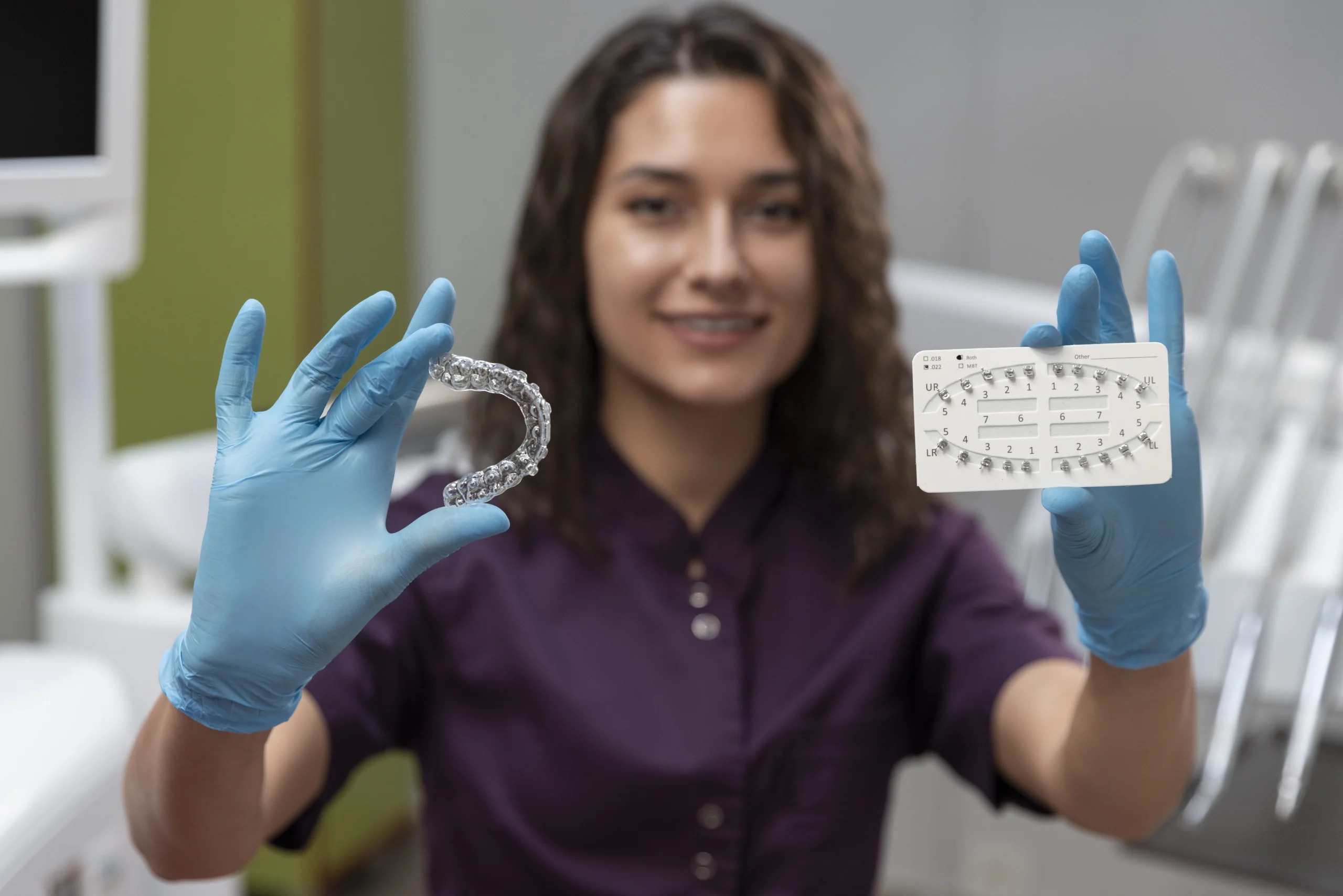
If you are considering teeth straightening treatment in Thane West, one of the first decisions you will face is choosing between Invisalign clear aligners and traditional braces. Both options effectively straighten teeth, correct bite issues, and improve oral health — but they differ significantly in how they work, what they cost, and how they fit into your daily life. This comparison covers everything you need to know to make an informed choice.
What Is the Difference Between Invisalign and Braces?
Traditional braces use metal brackets bonded to the teeth, connected by archwires that are periodically tightened to shift teeth into alignment. They are fixed in place throughout the treatment period and can only be removed by a dentist.
Invisalign uses a series of custom-made, clear removable aligners — made from smooth, medical-grade plastic — that are changed every one to two weeks as your teeth gradually move into position. Each aligner is precisely designed using 3D digital scans of your teeth. You remove them while eating, drinking, brushing, and flossing, then wear them for a minimum of 22 hours per day for the treatment to progress on schedule.
Both approaches can treat crowding, spacing, overbites, underbites, and crossbites. The right choice depends on the complexity of your case, your lifestyle, and your priorities.
Cost Comparison: Invisalign vs Braces in Thane
Cost is often the deciding factor for patients at our dental clinic in Kasarvadavali. Here is a realistic breakdown of what you can expect in the Thane and Mumbai region:
Traditional Metal Braces Metal braces remain the most affordable orthodontic option. In Thane West, the typical cost for a full course of metal braces ranges from approximately Rs. 25,000 to Rs. 60,000, depending on case complexity and whether any extractions or additional procedures are required. Ceramic braces, which are tooth-coloured and less visible, generally cost slightly more — typically Rs. 40,000 to Rs. 80,000 for a full treatment.
Invisalign Clear Aligners Invisalign treatment in India ranges from approximately Rs. 1,25,000 to Rs. 3,50,000, with the final figure depending on how many aligners are needed, the severity of misalignment, and the experience level of the treating dentist. Mild cases require fewer aligners and fall at the lower end of this range; complex cases involving significant bite correction will be priced higher.
Hidden Costs to Watch For When comparing costs at any dental clinic, check whether the quoted price includes adjustment visits, X-rays, retainers, and emergency appointments. These can add Rs. 10,000 to Rs. 30,000 to the total at some clinics. At Hermes Dental Care, we provide a clear, itemised cost estimate before any treatment begins so you understand exactly what is included.
Treatment Time: Which Option Is Faster?
Treatment duration varies by the complexity of each individual case, but general timelines for comparison are as follows:
Traditional Braces: Most patients complete treatment in 18 to 24 months. Severe misalignment or bite issues may require up to 36 months in some cases.
Invisalign: Mild to moderate cases can often be resolved in 6 to 18 months. A 2024 comparative clinical analysis published in the National Library of Medicine confirmed that Invisalign showed a shorter average treatment period compared to conventional braces while achieving equally good outcomes.
One important caveat with Invisalign: the treatment timeline assumes you are wearing your aligners for the required 22 hours per day. If aligners are frequently removed or forgotten, treatment will take longer. With braces, compliance is not a factor since they are fixed.
Results: Which Option Works Better?
For mild to moderate misalignment, both Invisalign and traditional braces deliver comparable results. The key differences emerge at the extremes of complexity.
Where Braces Have the Edge: Braces are generally better suited for severe crowding, complex bite corrections, significant tooth rotations, and cases involving younger patients whose jaws are still developing. Because braces are fixed, the dentist has more precise, continuous control over tooth movement at every stage.
Where Invisalign Has the Edge: Invisalign offers excellent results for mild to moderate cases and for adults who want a discreet treatment experience. The digital treatment planning process allows patients to see a simulation of their projected results before committing to treatment. Invisalign is also effective for patients who have previously had braces but need a refinement or have experienced relapse.
After Both Treatments: Retainers are required after both Invisalign and braces to maintain your results. Skipping retainers is the single most common reason teeth shift back after orthodontic treatment. This applies whether you chose aligners or metal braces.
Comfort and Daily Life
Invisalign aligners are made of smooth plastic and do not have brackets or wires that can irritate the inner cheeks and gums. A 2024 peer-reviewed study noted that clear aligner patients reported significantly lower pain scores compared to braces wearers, particularly during the first week of treatment.
With traditional braces, the wire and bracket system can cause soreness after each adjustment appointment, and certain foods — such as hard, crunchy, or sticky items — must be avoided entirely throughout treatment to prevent breakages.
Oral hygiene is also more straightforward with Invisalign since the aligners are removed for brushing and flossing. With braces, cleaning around brackets and wires requires additional tools and more time.
Both options require regular clinic visits: braces typically need adjustments every four to six weeks, while Invisalign checkups may be spaced slightly further apart depending on your progress.
Which Option Is Right for You?
Consider Invisalign if: You are an adult or working professional who wants a discreet treatment, your case is mild to moderate, you have strong compliance habits, and you are comfortable with the higher investment.
Consider Braces if: You have a complex or severe orthodontic case, you are treating a child or teenager, cost is a primary consideration, or your dentist recommends them based on clinical assessment.
The most reliable way to decide is through a professional orthodontic consultation, which includes X-rays and a full bite assessment. Our team at Hermes Dental Care in Kasarvadavali offers personalised consultations to evaluate your specific case and recommend the most effective, cost-efficient treatment plan. You can also explore our Smile Designing in Kasarvadavali and Cosmetic Dentistry in Kasarvadavali services if you are looking to combine orthodontic treatment with broader smile improvements.
Why Choose Us?
Choose Hermes Dental Care for expert, patient-focused dental care in Thane West, tailored to your needs at every stage — from preventive check-ups to advanced treatments. Our team prioritises personalised care in a clean, comfortable environment, ensuring a stress-free experience every time you visit. With a focus on modern technology, transparent guidance, and gentle treatment approaches, we help you achieve a healthy, confident smile. Whether it is routine dental care, cosmetic dentistry, or specialised procedures, we are here to support you — call 8766906524 or visit https://hermesdentalcare.in/ to book your appointment.
Frequently Asked Questions
Q1. Can Invisalign fix severe misalignment?
Invisalign works well for mild to moderate cases; severe crowding or complex bite issues are generally better treated with traditional braces, which your dentist will assess during consultation.
Q2. Is Invisalign suitable for teenagers?
Yes, Invisalign offers a Teen version designed for younger patients, though its success depends on the teen's ability to consistently wear the aligners for the required 22 hours per day.
Q3. How long do I need to wear retainers after treatment?
Retainers are typically worn full-time for the first few months after treatment, then nightly long-term; skipping retainers is the primary cause of teeth shifting back after orthodontic treatment.
Q4. Does Invisalign cost more than braces in Thane?
Yes, Invisalign is generally two to three times the cost of metal braces; however, the final difference depends on case complexity and the specific treatment plan recommended by your dentist.
Q5. Can I switch from braces to Invisalign mid-treatment?
In some cases this is possible, but it depends on what stage of treatment you are at and the clinical assessment of your dentist; a consultation is needed to determine feasibility.
Q6. Are the results of Invisalign and braces the same?
For mild to moderate misalignment, outcomes are comparable; for complex cases, braces may deliver more precise correction since the dentist has continuous, direct control over tooth movement.
Citations
- American Association of Orthodontists — Understanding Orthodontic Treatment: https://www.aaoinfo.org/treatments/
- National Library of Medicine — Comparative Analysis of Clear Aligners vs Braces (2024): https://pmc.ncbi.nlm.nih.gov/articles/PMC11426652/
- Invisalign India — Official Treatment Overview: https://www.invisalign.in/
- WebMD — Braces vs Clear Aligners: https://www.webmd.com/oral-health/dental-braces
- Mayo Clinic — Dental Braces: https://www.mayoclinic.org/tests-procedures/braces/about/pac-20384598
Related Posts