Professional teeth whitening is one of the most popular cosmetic dental treatments — and one of the most commonly misunderstood when it comes to how long the results actually last. Patients in Kasarvadavali and across Thane West often ask whether they will need to redo the treatment every few months or whether one session is enough for years. The honest answer is: it depends. Whitening longevity is not fixed — it is directly shaped by the type of treatment used, the original condition of your teeth, and the choices you make every day afterward. This guide breaks down all of it so you know exactly what to expect and how to make your results last as long as possible.
How Long Does Professional Teeth Whitening Last?
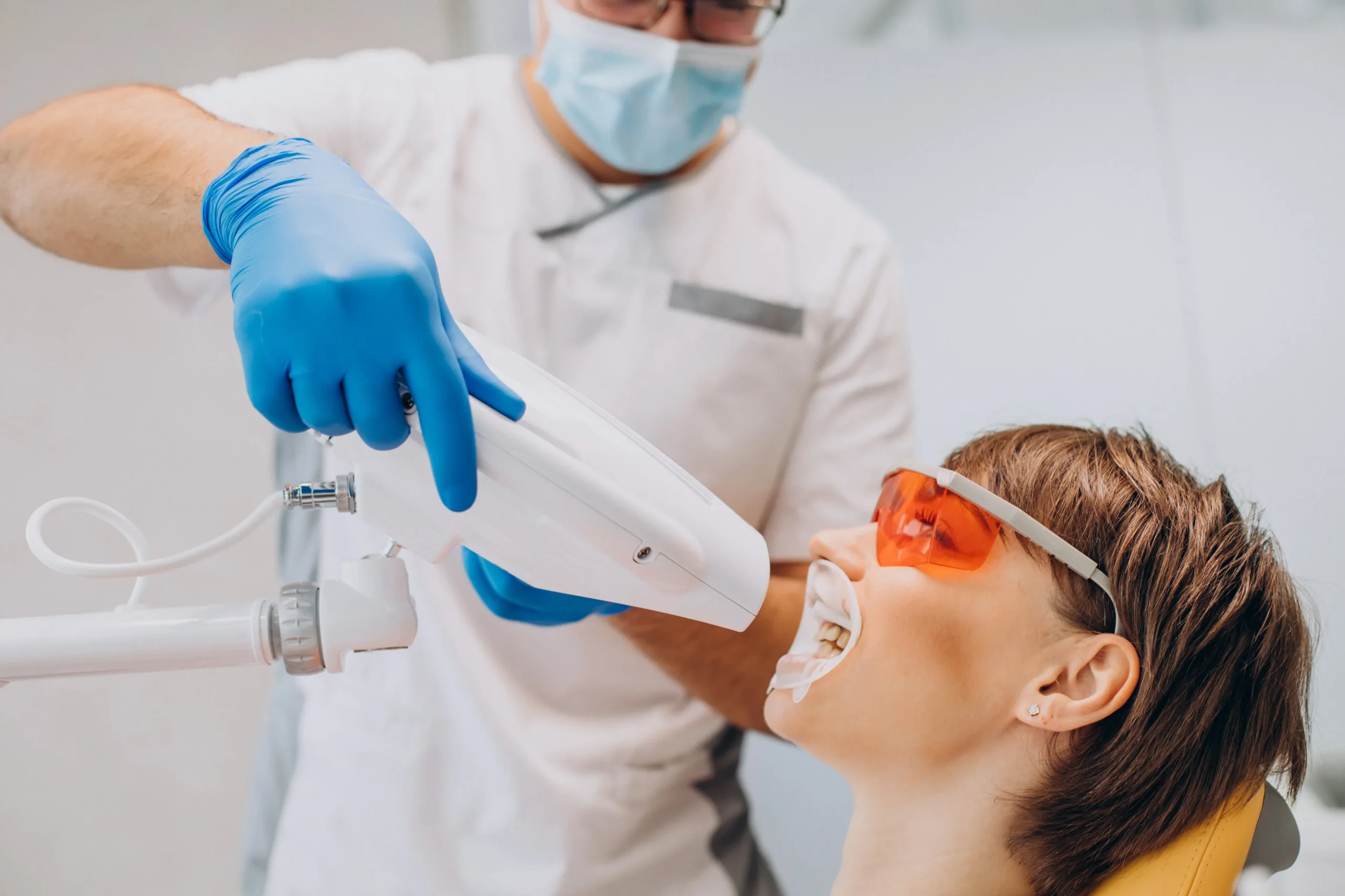
Professional in-clinic teeth whitening results typically last between one and two years for most patients. Some patients maintain their results for up to three years with consistent aftercare. Others notice fading within six to twelve months — particularly those who regularly consume staining foods and drinks or smoke.
Take-home whitening kits prescribed by a dentist use lower-concentration bleaching agents applied over two to four weeks and deliver results that last a comparable duration, though the initial shade improvement is often slightly less dramatic than an in-clinic session.
Over-the-counter whitening strips and kits produce more modest results that tend to fade faster — typically within three to six months — because the peroxide concentration is significantly lower and the trays are not custom-fitted to the teeth.
The key point is that no whitening treatment is permanent. Teeth are naturally porous and will absorb pigments from food, drink, and lifestyle habits over time regardless of the treatment used. What professional whitening gives you is a significant, reliable starting point — and the longevity of that starting point is largely in your hands from that point forward.
Factors That Affect How Long Your Whitening Results Last
Diet and Food Choices
What you eat and drink is the single biggest determinant of how quickly whitening results fade. Dark-pigmented foods and drinks — coffee, tea, red wine, cola, soy sauce, berries, and curries — contain chromogens that bind to tooth enamel and cause progressive restaining. Acidic foods and drinks compound this by temporarily softening enamel and making it more receptive to staining immediately after consumption.
This does not mean avoiding these foods permanently. It means being mindful, particularly in the weeks immediately after whitening when the enamel pores are more open. Rinsing with water after consuming staining foods or drinks significantly reduces the uptake of pigment into the enamel surface.
Smoking and Tobacco Use
Tobacco — whether smoked or chewed — is one of the most aggressive causes of tooth discolouration. Nicotine and tar penetrate the enamel rapidly and produce deep yellow and brown staining that is difficult to reverse and will return quickly after whitening if the habit continues. Patients who smoke can expect their whitening results to fade considerably faster than non-smokers, often within three to six months. Stopping or significantly reducing tobacco use is the single most effective lifestyle change for preserving whitening results.
Oral Hygiene Routine
Consistent brushing twice daily, flossing once daily, and using a fluoride toothpaste removes surface plaque and early staining before it has the chance to set into the enamel. Patients who maintain a thorough oral hygiene routine consistently see longer-lasting whitening results than those who do not. Using a whitening toothpaste two to three times per week after professional treatment can help manage surface staining between professional sessions, though it cannot replicate or replace the depth of result from a professional treatment.
Natural Tooth Colour and Enamel Thickness
Not all teeth whiten equally. Teeth with a naturally yellow base tone respond very well to professional whitening — yellow pigments are broken down effectively by peroxide-based bleaching agents. Teeth with a naturally grey or bluish-grey tone — often associated with tetracycline antibiotic use during tooth development — are more resistant to bleaching and may not achieve the same level of improvement. Enamel thickness also plays a role: thinner enamel allows more of the underlying dentine colour to show through, which can make results appear less bright even after successful whitening.
Your dentist will assess your natural tooth shade and enamel condition at consultation and give you a realistic expectation of outcome before treatment begins. If bleaching alone is unlikely to deliver the result you want, alternatives such as dental veneers or smile designing in Kasarvadavali may be more appropriate for your case.
Age
Teeth naturally darken with age as the outer enamel layer thins and the inner dentine — which is more yellow — becomes more visible. This means that older patients may notice results that appear less dramatically white than younger patients, and that the baseline shade returns more quickly over time because the ageing process continues. This does not make whitening ineffective for older patients — the improvement is still visible and meaningful — but it is a factor in realistic expectation-setting.
Existing Dental Restorations
Dental crowns, veneers, composite fillings, and bonding do not respond to whitening agents. If you have visible restorations on the front teeth, whitening your natural teeth may create a noticeable shade mismatch as the natural teeth lighten and the restorations stay the same colour. This is why your dentist should review all existing dental work before proceeding with any whitening treatment. If new restorations are being planned — such as veneers as part of a smile makeover in Kasarvadavali — whitening is ideally completed first, and the restorations are colour-matched to the post-whitening shade.
How Often You Top Up
Whitening results are maintainable — they do not have to be a one-time investment. A dentist-prescribed take-home maintenance kit used for one to two days every three to four months, combined with a routine dental checkup and cleaning in Kasarvadavali, is sufficient for most patients to maintain their results at a consistently bright level between full in-clinic sessions. Patients who never top up and make no dietary adjustments are comparing a very different outcome to those who manage aftercare actively — the difference in longevity can be significant.
Professional vs At-Home vs Over-the-Counter: Longevity Compared
|
Treatment Type |
Typical Longevity | Shade Improvement | Key Limitation |
| Professional in-clinic whitening | 1–3 years | 6–10 shades |
Higher cost; requires clinic visit |
|
Dentist-prescribed take-home kit |
1–2 years | 4–8 shades | Slower result; requires patient compliance |
| Over-the-counter strips or kits | 3–6 months | 2–4 shades |
Low concentration; non-custom trays |
|
Whitening toothpaste (maintenance) |
Not a standalone treatment | Surface stains only |
Cannot replace professional treatment |
The table above reflects averages. Individual results within each category vary based on all the factors discussed above. What it illustrates clearly is that professional treatment delivers the most durable result — and that OTC products, while accessible, are not a substitute for clinical whitening when meaningful, lasting improvement is the goal.
How to Make Your Teeth Whitening Results Last Longer
The following habits, applied consistently, will extend the life of your whitening results significantly:
Avoid staining beverages for at least 48 hours after professional whitening — this is the window when the enamel pores are most open and most susceptible to restaining. After that window, drinking through a straw reduces direct contact between staining liquids and the front tooth surfaces. Rinse with water after consuming dark-pigmented foods or drinks. Brush twice daily with a fluoride toothpaste and floss daily. Use a dentist-prescribed maintenance whitening kit every three to four months. Attend a professional cleaning every six months — the mechanical removal of surface stain and tartar during a professional clean is something no at-home routine can replicate. Avoid or significantly reduce tobacco use.
When Should You Consider Re-Whitening?
Most patients benefit from a full in-clinic re-whitening session every twelve to eighteen months. If you have been maintaining results well with a take-home kit and routine cleans, this interval may be extended further. The right timing is guided by how your teeth look relative to the shade you want to maintain — there is no fixed schedule that applies universally. Your dentist at our teeth whitening clinic in Kasarvadavali will assess your current shade at each visit and advise when a top-up session would be appropriate based on your actual results rather than a blanket schedule.
Why Choose Us?
Choose Hermes Dental Care for expert, patient-focused dental care in Thane West, tailored to your needs at every stage — from preventive check-ups to advanced treatments. Our team prioritises personalised care in a clean, comfortable environment, ensuring a stress-free experience every time you visit. With a focus on modern technology, transparent guidance, and gentle treatment approaches, we help you achieve a healthy, confident smile. Whether it is routine dental care, cosmetic dentistry, or specialised procedures, we are here to support you — call 8766906524 or visit https://hermesdentalcare.in/ to book your appointment.
Frequently Asked Questions
Q1. How long does professional teeth whitening last?
Professional in-clinic teeth whitening typically lasts one to two years in India, with results extending up to three years for patients who follow aftercare guidelines and attend regular dental cleanings.
Q2. Does teeth whitening fade quickly?
Results fade gradually rather than suddenly; the speed of fading depends primarily on diet, tobacco use, and oral hygiene — patients who consume staining foods and drinks regularly or smoke will notice faster fading than those who manage these factors.
Q3. How often should I redo teeth whitening?
Most patients benefit from a full in-clinic re-whitening session every twelve to eighteen months, with a dentist-prescribed take-home maintenance kit used every three to four months in between to preserve the result.
Q4. Does teeth whitening last longer with professional treatment than at-home kits?
Yes — professional in-clinic whitening delivers results that last one to three years compared to three to six months for most over-the-counter products, primarily because of the higher peroxide concentration and custom-fitted trays used in professional treatment.
Q5. What foods should I avoid after teeth whitening?
Coffee, tea, red wine, cola, dark berries, soy sauce, and any strongly pigmented food or drink should be avoided for at least 48 hours after whitening and moderated thereafter to preserve results.
Q6. Can I whiten my teeth if I have crowns or veneers?
Whitening agents do not affect crowns, veneers, or composite restorations; your dentist will assess any existing dental work before treatment and advise whether whitening is appropriate and how to manage any potential shade differences.
Citations
- American Dental Association — Tooth Whitening: https://www.ada.org/resources/research/science-and-research-institute/oral-health-topics/tooth-whitening
- National Library of Medicine — Efficacy and Longevity of Tooth Whitening Treatments (2024): https://pmc.ncbi.nlm.nih.gov/articles/PMC11426652/
- Colgate India — How Long Does Teeth Whitening Last: https://www.colgate.com/en-in/oral-health/teeth-whitening/how-long-does-teeth-whitening-last
- WebMD — Teeth Whitening: What You Should Know: https://www.webmd.com/oral-health/teeth-whitening
- Mayo Clinic — Tooth Whitening: What Dental Research Shows: https://www.mayoclinic.org/healthy-lifestyle/adult-health/expert-answers/whitening-toothpaste/faq-20058411