What Happens If You Delay Treating a Tooth Cavity? Stages, Risks and Treatment Options
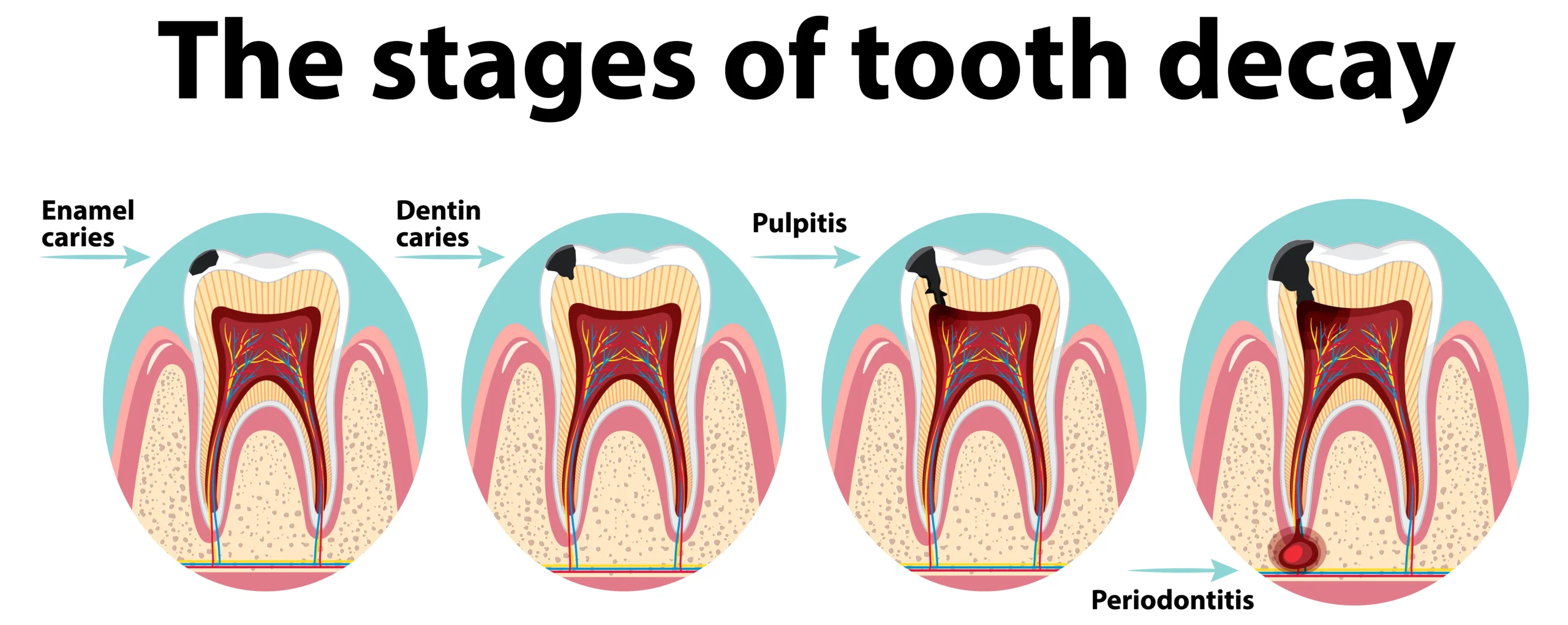
A tooth cavity might seem like a minor inconvenience — a small problem you can deal with later. But delaying cavity treatment is one of the most common reasons patients end up needing far more extensive and expensive dental work than they would have if they had acted earlier. Cavities do not stay small. They progress through predictable stages, each one more damaging than the last, and the treatment required at each stage becomes more complex and costly. If you have been putting off a dental visit in Kasarvadavali or across Thane West because your cavity does not hurt yet, this guide explains exactly what is happening inside that tooth and what it will cost you to wait.
What Is a Tooth Cavity?
A tooth cavity — also called dental caries or tooth decay — is the destruction of tooth structure caused by acids produced when bacteria in the mouth break down sugars from food and drink. The acid attacks the outer enamel layer first, then progressively works inward through the dentine, and eventually reaches the pulp — the living tissue at the centre of the tooth containing nerves and blood vessels. This progression does not happen overnight, but it does happen continuously, and it does not reverse on its own once decay has moved past the earliest stage.
The 5 Stages of Tooth Decay — and What Delaying Costs You at Each One
Stage 1: Enamel Demineralisation
This is the earliest detectable stage, often visible as a white spot or chalky patch on the tooth surface. The enamel is losing minerals but has not yet broken down into a cavity. At this stage, the process is technically reversible — fluoride treatments, remineralising toothpastes, and improved oral hygiene can halt and even reverse the early damage.
Treatment at this stage: No drilling. Fluoride application and dietary advice. Minimal cost, one visit.
What happens if you delay: The softened enamel continues to break down under ongoing acid attack and progresses to a full enamel cavity.
Stage 2: Enamel Decay
The enamel has broken down and a cavity has formed on the outer surface of the tooth. There is usually no pain at this stage because enamel contains no nerves. This is the stage at which most patients would have no idea anything is wrong without an X-ray or clinical examination — which is precisely why routine dental checkups and cleanings in Kasarvadavali at six-monthly intervals catch cavities before patients do.
Treatment at this stage: A simple composite or tooth-coloured filling. Fast, comfortable, and cost-effective.
What happens if you delay: Decay breaks through the enamel and reaches the dentine layer beneath.
Stage 3: Dentine Decay
Dentine is softer and more porous than enamel, so decay spreads faster at this stage. The dentine contains microscopic tubules that connect to the nerve, which is why patients typically start experiencing sensitivity to hot, cold, and sweet at this point. Pain may come and go. This stage still does not require root canal treatment in most cases, but the filling required is larger and more involved than it would have been at Stage 2.
Treatment at this stage: A larger composite filling or an inlay/onlay depending on how much tooth structure is affected. Still manageable.
What happens if you delay: Decay continues inward toward the pulp chamber.
Stage 4: Pulp Involvement
When decay reaches the pulp, infection begins. Bacteria enter the living tissue of the tooth, causing inflammation and eventually pulp death. This is when the pain becomes unmistakable — spontaneous, throbbing toothache, pain that lingers long after the stimulus is removed, pain that wakes you at night. At this stage, a simple filling is no longer sufficient. Root canal treatment is now the only way to save the tooth. The infected pulp is removed, the canal is cleaned and sealed, and a dental crown is placed to restore the tooth's strength.
Treatment at this stage: Root canal treatment followed by a crown — typically two to three appointments. Significantly more expensive than a filling.
What happens if you delay: Infection spreads beyond the tooth to the surrounding bone.
Stage 5: Abscess and Bone Involvement
If pulp infection is left untreated, bacteria spread through the tip of the root into the surrounding bone and gum tissue, forming a dental abscess. This is a serious condition. Severe, constant pain, visible swelling of the face or jaw, fever, and a bad taste in the mouth are classic signs. An abscess requires immediate intervention — antibiotics, drainage of the abscess, and either root canal treatment or extraction. In advanced cases, the bone loss around the tooth is irreversible, and extraction becomes unavoidable. Spread of infection beyond the jaw, though rare, is a genuine medical emergency.
Treatment at this stage: Emergency intervention, likely extraction, and if the tooth is lost, replacement with a dental implant or bridge — the most expensive outcome of what began as a small cavity.
The Real Cost of Waiting
Across the five stages above, the trajectory is straightforward: a Rs. 1,500 to Rs. 3,000 filling at Stage 2 becomes a Rs. 8,000 to Rs. 20,000 root canal and crown procedure at Stage 4, and potentially a Rs. 40,000 to Rs. 1,20,000 dental implant at Stage 5 if the tooth is lost. The financial cost of delay is significant. The clinical cost — permanent loss of a natural tooth — is greater.
Pain is not a reliable guide to when to act. Stage 2 and early Stage 3 cavities are typically completely painless. By the time a cavity hurts consistently, you are already at a stage that requires substantially more treatment than early intervention would have. Waiting for pain is not caution — it is a decision to let the problem escalate.
Treatment Options at Each Stage — Summary
Stage 1 — Demineralisation: Fluoride treatment, remineralising agents, dietary modifications. Reversible. No drilling required.
Stage 2 — Enamel Cavity: Composite tooth-coloured filling. Single appointment. Fully preserves the remaining tooth structure.
Stage 3 — Dentine Decay: Composite filling or inlay/onlay. More material removed but tooth remains intact and vital.
Stage 4 — Pulp Infection: Root canal treatment followed by a dental crown. Multiple appointments. Tooth is saved but no longer vital.
Stage 5 — Abscess: Emergency treatment, antibiotics, drainage, and in most cases extraction. Replacement with an implant, bridge, or denture required to prevent bone loss and shifting of adjacent teeth. Our general dentistry in Kasarvadavali team handles everything from early cavity detection and fillings through to coordinating with specialist care for complex cases.
How to Prevent Cavities From Progressing
Brushing twice daily with a fluoride toothpaste, flossing once daily, limiting sugary and acidic food and drinks, and attending a professional checkup every six months are the four pillars of cavity prevention that apply universally. For patients at higher cavity risk — those with dry mouth, a high-sugar diet, a history of frequent decay, or wearing orthodontic appliances — more frequent professional review may be recommended.
Our family dentistry in Kasarvadavali service covers cavity prevention and early detection for every member of the household, from children through to adults, within a single practice. For children specifically, fissure sealants applied to the back teeth during the cavity-prone years offer meaningful additional protection — speak to our paediatric dentist in Kasarvadavali for advice tailored to your child's age and risk profile.
Why Choose Us?
Choose Hermes Dental Care for expert, patient-focused dental care in Thane West, tailored to your needs at every stage — from preventive check-ups to advanced treatments. Our team prioritises personalised care in a clean, comfortable environment, ensuring a stress-free experience every time you visit. With a focus on modern technology, transparent guidance, and gentle treatment approaches, we help you achieve a healthy, confident smile. Whether it is routine dental care, cosmetic dentistry, or specialised procedures, we are here to support you — call 8766906524 or visit https://hermesdentalcare.in/ to book your appointment.
Frequently Asked Questions
Q1. Can a tooth cavity heal on its own without treatment?
Early-stage enamel demineralisation can be reversed with fluoride and improved hygiene, but once a cavity has formed through the enamel, it cannot heal itself and requires professional treatment to stop further progression.
Q2. How do I know if I have a tooth cavity?
Early cavities are often symptom-free; sensitivity to sweet, hot, or cold and visible dark spots or holes are signs of more progressed decay — a dental X-ray during a routine checkup is the most reliable way to detect cavities at any stage.
Q3. What happens if a tooth cavity is left untreated for years?
Untreated decay progresses through the enamel and dentine into the pulp, leading to infection, abscess formation, bone loss, and ultimately tooth loss — along with escalating treatment complexity and cost at every stage.
Q4. Is root canal treatment always needed for a cavity?
Root canal treatment is only required when decay has reached the pulp of the tooth; cavities detected at Stages 1, 2, or 3 can be treated with fluoride application or fillings without affecting the nerve.
Q5. How often should I get checked for cavities?
A professional dental examination every six months is the standard recommendation; patients with a history of frequent decay or other risk factors may benefit from more frequent visits as advised by their dentist.
Q6. Are children more prone to cavities than adults?
Children are at higher risk due to developing enamel, dietary habits, and brushing technique; professional cleanings, fluoride treatments, and fissure sealants during childhood significantly reduce the long-term cavity burden.
Citations
- World Health Organization — Global Oral Health Status Report 2022: https://www.who.int/publications/i/item/9789240061484
- National Library of Medicine — Progression of Dental Caries: A Review: https://pmc.ncbi.nlm.nih.gov/articles/PMC5885814/
- Mayo Clinic — Cavities and Tooth Decay: https://www.mayoclinic.org/diseases-conditions/cavities/symptoms-causes/syc-20352892
- American Dental Association — Tooth Decay: https://www.ada.org/resources/research/science-and-research-institute/oral-health-topics/caries-risk-assessment-and-management
- Indian Dental Association — Preventive Dentistry Guidelines: https://publication.ida.org.in/
Related Posts