

Smile Makeover: Which Treatments Are Included?

A smile makeover is not a single procedure — it is a personalised combination of cosmetic and restorative dental treatments planned together to transform how your smile looks and functions. Patients across Kasarvadavali and Thane West often come in wanting a better smile but unsure of what that actually involves clinically. This guide breaks down exactly which treatments can be part of a smile makeover, how they work together, who is a suitable candidate, and what the process looks like from consultation to final result.

What Is a Smile Makeover?

A smile makeover  also referred to as smile designing  is a comprehensive, custom-planned treatment programme that addresses multiple aesthetic concerns at once. Unlike a single cosmetic procedure such as whitening, a smile makeover looks at the complete picture: the colour, shape, size, alignment, and proportion of your teeth relative to your gums, lips, and facial features.

The treating dentist evaluates all of these elements together and designs a treatment sequence that delivers a cohesive result. No two smile makeovers are identical  a plan for one patient may involve two procedures while another may involve five, depending on the presenting concerns and aesthetic goals.

Treatments Commonly Included in a Smile Makeover

Teeth Whitening

Whitening is one of the most frequently included starting points in any smile makeover. Professional-grade bleaching removes deep and surface stains, establishing a baseline tooth shade that all other restorations — veneers, crowns, or composite work — are colour-matched to. This is why whitening is typically performed before placing any new dental restorations rather than after. Our teeth whitening in Kasarvadavali service uses prescription-strength agents with results that are noticeably stronger than anything available over the counter.

Dental Veneers and Laminates

Porcelain veneers and dental laminates are ultra-thin shells bonded to the front surface of the teeth to correct shape, size, colour, and minor misalignment in one step. They are one of the most powerful tools in smile designing because a single set of veneers can simultaneously address multiple concerns — chipped edges, uneven lengths, spacing, and discolouration that does not respond to whitening — producing a uniform, natural-looking result. Porcelain veneers typically last 10 to 15 years; composite laminates offer a more affordable, reversible alternative completed in fewer visits.

Dental Bonding

Composite bonding uses tooth-coloured resin applied directly to the tooth to repair chips, close small gaps, rebuild worn edges, or reshape uneven teeth. It is one of the most cost-effective components of a smile makeover and can often be completed in a single appointment without removing any natural tooth structure. Bonding works well for minor corrections and is frequently combined with whitening for a complete aesthetic improvement at a manageable cost.

Dental Implants

Where missing teeth are part of the picture, a smile makeover cannot be complete without addressing the gaps. Dental implants replace missing teeth with titanium-rooted, crown-topped restorations that look, feel, and function like natural teeth. They also prevent the bone loss and facial changes that develop over time when a tooth is missing. In a smile makeover context, implants are placed and integrated before surface aesthetic work such as veneers or whitening is finalised, so the full smile is designed as one cohesive unit.

Gum Contouring and Gum Treatments

An uneven or excessive gum line — often called a gummy smile — significantly affects the visual balance of a smile even when the teeth themselves are in good condition. Gum contouring reshapes and removes excess gum tissue to reveal more of the tooth surface and create a more proportionate smile line. Where gum disease is present, it must be treated before any cosmetic work begins. Our gum treatments in Kasarvadavali cover both therapeutic gum care and aesthetic contouring as part of a comprehensive treatment plan.

Orthodontic Treatment and Clear Aligners

Straightening misaligned or crowded teeth is a foundational step in many smile makeovers — particularly for patients where the underlying tooth position needs correction before cosmetic veneers or bonding can deliver the right result. Traditional braces and Invisalign clear aligners are both options, depending on the complexity of the case. Read our full breakdown of Invisalign vs braces to understand which option suits your case.

Dental Crowns

Where teeth are severely worn, cracked, weakened, or have undergone root canal treatment, dental crowns are used to restore the full structure and appearance of the tooth. In a smile makeover, crowns may be required for one or two anchor teeth while veneers handle the remaining visible teeth — the result is a uniform appearance across the full smile with each tooth restored appropriately for its condition.

Root Canal Treatment

While not a cosmetic procedure in itself, root canal treatment is sometimes a necessary precursor to smile makeover work when a tooth is infected or severely compromised but needs to be preserved as part of the final smile design. Extracting and implanting would be one option; saving the tooth through root canal treatment and restoring it with a crown is often the better choice where the tooth structure allows. The clinical and cosmetic outcomes are planned together so the treated tooth fits seamlessly into the wider smile design.

How Is a Smile Makeover Planned?

The process at our smile designing clinic in Kasarvadavali begins with a comprehensive consultation that includes clinical examination, digital X-rays, photographs, and — where indicated — intraoral scans. These records allow the dentist to assess the condition of your teeth, gums, and bite and map out a treatment sequence.

Digital smile design tools allow patients to preview an approximation of the expected outcome before any procedure begins, so you are not committing to treatment blind. Once the plan is agreed upon, procedures are sequenced logically — foundational work such as gum treatment, implants, or orthodontics comes first; surface aesthetic treatments such as whitening, veneers, and bonding come last.

The total duration of a smile makeover depends entirely on which treatments are involved. A makeover combining whitening and veneers can be completed in two to three weeks. One that includes orthodontic treatment or implants may span six to eighteen months. Your dentist will give you a realistic timeline during the planning consultation.

Who Is a Good Candidate for a Smile Makeover?

A smile makeover is suitable for any adult with good general health who has one or more aesthetic concerns about their smile that they have wanted to address. Common presentations include teeth that are stained or discoloured, chipped, worn, or uneven teeth, visible gaps or spacing, a gummy smile, missing teeth, or a combination of several of the above.

The one prerequisite is that active oral health issues — gum disease, untreated decay, infections — must be resolved before cosmetic work begins. A routine dental checkup and cleaning in Kasarvadavali is always the right starting point if you are not currently up to date with your dental health. Cosmetic work on an unstable foundation will not last, regardless of the quality of treatment.

Why Choose Us?

Choose Hermes Dental Care for expert, patient-focused dental care in Thane West, tailored to your needs at every stage — from preventive check-ups to advanced treatments. Our team prioritises personalised care in a clean, comfortable environment, ensuring a stress-free experience every time you visit. With a focus on modern technology, transparent guidance, and gentle treatment approaches, we help you achieve a healthy, confident smile. Whether it is routine dental care, cosmetic dentistry, or specialised procedures, we are here to support you — call 8766906524 or visit https://hermesdentalcare.in/ to book your appointment.

Frequently Asked Questions

Q1. How much does a smile makeover cost in Thane?

The cost varies based on which treatments are included — a basic smile makeover combining whitening and bonding may start from Rs. 15,000 to Rs. 30,000, while comprehensive plans involving veneers, implants, or orthodontics can range significantly higher; a consultation provides a precise estimate.

Q2. How long does a smile makeover take?

Timeline depends on the procedures involved — whitening and veneers can be completed in two to three weeks, while makeovers that include clear aligners or implants may take six to eighteen months in total.

Q3. Is a smile makeover painful?

Most procedures within a smile makeover are performed under local anaesthesia; any post-treatment discomfort is typically mild and short-lived, and your dentist will guide you on appropriate pain management for each stage.

Q4. How long do smile makeover results last?

Porcelain veneers last 10 to 15 years, dental implants are considered a lifetime solution with proper care, and whitening requires periodic maintenance; the overall longevity of the makeover depends on daily oral hygiene and regular dental visits.

Q5. Can I get a smile makeover if I have missing teeth?

Yes — addressing missing teeth through dental implants or bridges is often a core component of the smile makeover plan, ensuring a complete and balanced result.

Q6. Do I need to complete all procedures at once?

No — smile makeover treatments are sequenced in stages; your dentist will plan the order based on clinical priority, and the schedule can be spread out based on your availability and budget.

Citations

  1. American Academy of Cosmetic Dentistry — Smile Makeovers: https://www.aacd.com/learn/cosmetic-dentistry-procedures/smile-makeovers/
  2. National Library of Medicine — Digital Smile Design: A Review of Evidence (2024): https://pmc.ncbi.nlm.nih.gov/
  3. WebMD — Cosmetic Dentistry Smile Makeover: https://www.webmd.com/oral-health/cosmetic-dentistry-smile-makeover
  4. Colgate India — What Is a Smile Makeover: https://www.colgate.com/en-in/oral-health/cosmetic-dentistry/smile-makeover
  5. Indian Dental Association — Cosmetic and Restorative Dentistry Guidelines: https://publication.ida.org.in/
Everything You Need to Know About Wisdom Teeth Removal

Wisdom teeth are the last set of molars to emerge, typically appearing between the ages of 17 and 25. For many patients in Kasarvadavali and across Thane West, they arrive without any problems. For a significant number of others, they cause pain, infection, crowding, or damage to neighbouring teeth — and removal becomes the most sensible clinical course of action. If you have been told you need your wisdom teeth out, or are experiencing discomfort at the back of your jaw and wondering whether removal is necessary, this guide covers everything you need to know.

What Are Wisdom Teeth and Why Do They Cause Problems?

Wisdom teeth  also called third molars  are the four permanent molars located at the very back of the mouth, one in each corner of the jaw. Most adults have all four, though some people have fewer or none at all.

The human jaw has evolved to be smaller over thousands of years, and in most modern adults there simply is not enough space at the back of the mouth to accommodate these additional molars properly. When the jaw lacks adequate space, wisdom teeth can become impacted — meaning they are unable to erupt fully through the gum and grow at an angle, partially through the gum, or remain completely trapped within the bone. Impacted wisdom teeth are one of the most common sources of dental pain and infection seen at our oral surgery clinic in Kasarvadavali.

Signs That Your Wisdom Teeth May Need to Be Removed

Not every wisdom tooth requires extraction. Some erupt cleanly and cause no problems at all. The following signs typically indicate that an assessment and likely removal is needed:

Persistent pain or pressure at the back of the jaw, swelling or tenderness around the gum at the rear of the mouth, difficulty opening the mouth fully, recurrent infection or bad taste in the area, visible partial eruption through the gum with inflamed tissue around it, and crowding or shifting of adjacent teeth are all clinical indicators that warrant attention. Some impacted wisdom teeth cause no symptoms but are identified on routine X-rays as a risk to neighbouring molars — in these cases, early removal is often recommended before complications develop.

If you are experiencing any of these symptoms, a routine dental checkup and cleaning in Kasarvadavali that includes a panoramic X-ray will give your dentist a clear picture of where your wisdom teeth are positioned and whether removal is the right course.

What Is Surgical Wisdom Tooth Removal?

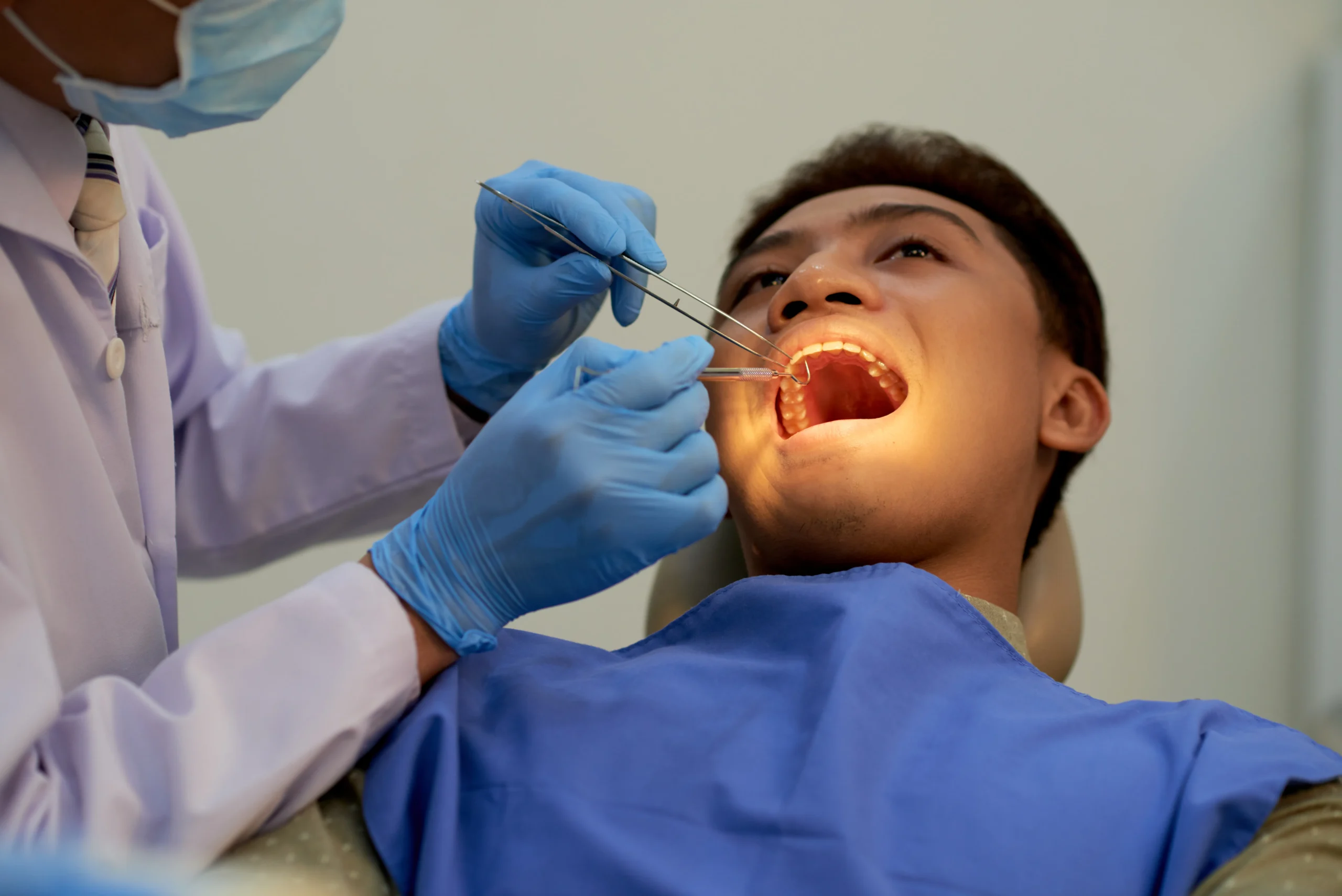
When a wisdom tooth is fully erupted and has a clear path out, a straightforward extraction — similar to removing any other tooth — is all that is needed. When the tooth is impacted, partially erupted, or growing at an angle, surgical removal is required.

Surgical third molar removal, the clinical term for wisdom tooth surgery, involves making a small incision in the gum tissue to access the tooth, sometimes removing a small amount of bone surrounding the tooth, dividing the tooth into sections if necessary to minimise bone removal, extracting each section, and then closing the site with dissolvable sutures. The procedure sounds more involved than it feels — it is performed entirely under local anaesthesia, and most patients are surprised by how comfortable the experience is in practice.

At Hermes Dental Care, our surgical third molar removal in Kasarvadavali is performed by a specialist oral and maxillofacial surgeon ensuring clinical precision and proper post-operative care at every stage.

What to Expect on the Day of the Procedure

Wisdom tooth removal at a dental clinic is a day procedure. You will not need to be admitted to a hospital. On arrival, local anaesthesia is administered to fully numb the area. Once the area is confirmed numb, the procedure begins. Most surgical extractions are completed within 30 to 60 minutes depending on the complexity and number of teeth being removed.

You will not feel pain during the procedure — you may feel pressure and movement, but not sharp discomfort. If you experience any sensation beyond pressure at any point, inform your dentist immediately and additional anaesthetic will be administered.

After the extraction, gauze is placed over the site and you will be asked to bite down firmly for 30 to 45 minutes to control initial bleeding. A post-operative care sheet will be given to you covering diet, activity, and hygiene instructions for the days that follow.

Recovery: What Is Normal and What Is Not

The first 48 to 72 hours after wisdom tooth removal are when the most noticeable effects occur. Swelling, mild to moderate pain, and some bleeding are all entirely normal during this period. Swelling typically peaks at around 48 hours and then gradually subsides over the following three to four days. Pain is managed with prescribed or over-the-counter analgesics as recommended by your dentist.

What helps recovery: Keeping the head elevated for the first 24 hours, applying an ice pack to the outside of the cheek in the first 24 hours, eating soft foods — yoghurt, dal, khichdi, mashed vegetables, smoothies — and avoiding hot, hard, or spicy food, rinsing gently with warm salt water from 24 hours after surgery onwards, and taking all prescribed antibiotics for the full course.

What to avoid: Vigorous rinsing or spitting in the first 24 hours (it can dislodge the clot), using a straw, smoking, and strenuous physical activity in the first 48 to 72 hours.

Most patients return to normal work and daily activities within two to four days. Full tissue healing takes two to four weeks, though discomfort resolves well before that for most people.

When to contact your dentist: If you experience severe pain that worsens after three to four days rather than improving — particularly a throbbing, deep pain in the socket — it may indicate dry socket (alveolar osteitis), which occurs when the protective blood clot dislodges before healing is complete. It is entirely treatable but requires prompt attention. Fever, excessive swelling that worsens after 72 hours, or numbness that persists beyond 24 hours are also reasons to contact the clinic promptly.

Does Everyone Need Their Wisdom Teeth Removed?

No — this is an important point. Wisdom teeth that have erupted cleanly, are properly positioned, and can be kept clean through normal brushing and flossing do not require removal simply because they are wisdom teeth. The decision to remove is always based on clinical assessment — the position of the tooth on X-ray, whether it is causing or likely to cause damage to adjacent teeth, the presence of infection or cyst formation, and the patient’s overall oral health status.

Early assessment — ideally in the late teens or early twenties — is advisable because the roots of wisdom teeth are not yet fully formed at that age, making removal technically simpler and recovery faster. Waiting until problems develop increases procedural complexity and recovery time. If you have not had your wisdom teeth assessed and are in this age range, a check-up is the sensible next step. You can also learn more about related surgical procedures through our oral surgery in Kasarvadavali page.

Can Wisdom Tooth Removal Affect Orthodontic Treatment?

Yes — and this is a question that comes up frequently among patients undergoing or considering teeth straightening. Impacted or partially erupted wisdom teeth can exert pressure on adjacent molars and, in some cases, contribute to crowding of the front teeth over time. Whether wisdom tooth removal is recommended before, during, or after orthodontic treatment depends on the individual case and is assessed jointly between the orthodontist and the oral surgeon.

If you are currently considering clear aligners or braces, it is worth discussing wisdom tooth status during your orthodontic consultation. Our team at Hermes Dental Care coordinates between specialties — orthodWisdom Teeth Removalontics, oral surgery, and restorative care — so treatment is planned as a coherent whole rather than in isolation. You can read more about orthodontic options in our Invisalign vs braces guide.

Why Choose Us?

Choose Hermes Dental Care for expert, patient-focused dental care in Thane West, tailored to your needs at every stage — from preventive check-ups to advanced treatments. Our team prioritises personalised care in a clean, comfortable environment, ensuring a stress-free experience every time you visit. With a focus on modern technology, transparent guidance, and gentle treatment approaches, we help you achieve a healthy, confident smile. Whether it is routine dental care, cosmetic dentistry, or specialised procedures, we are here to support you — call 8766906524 or visit https://hermesdentalcare.in/ to book your appointment.

Frequently Asked Questions

Q1. Is wisdom tooth removal painful?

The procedure is performed under local anaesthesia so you will not feel pain during removal; post-operative discomfort is normal for two to four days and is managed with prescribed pain relief.

Q2. How long does wisdom tooth removal take?

A straightforward extraction takes 20 to 30 minutes; a surgical removal of an impacted wisdom tooth typically takes 45 to 60 minutes depending on the position and complexity of the tooth.

Q3. How many days rest do I need after wisdom tooth removal?

Most patients return to desk work and normal daily activities within two to four days; strenuous physical activity should be avoided for at least 72 hours after the procedure.

Q4. Can all four wisdom teeth be removed at once?

Yes — removing all four in a single session is possible and is sometimes recommended to consolidate recovery; your oral surgeon will advise based on your specific case and preference.

Q5. What is dry socket and how is it treated?

Dry socket occurs when the blood clot in the extraction site dislodges before healing is complete, causing intensified pain from day three onward; it is treated at the clinic with a medicated dressing placed in the socket, which provides relief promptly.

Q6. Is wisdom tooth removal covered under dental insurance in India?

Coverage depends on your specific insurance plan; surgical extractions are often included under major dental benefits but the extent of coverage varies — check your policy or speak with your insurer before your appointment.

Citations

  1. American Association of Oral and Maxillofacial Surgeons — Wisdom Teeth: https://www.aaoms.org/patient-care/dentoalveolar-surgery/wisdom-teeth/
  2. National Library of Medicine — Impacted Third Molars: Review of Assessment and Management (2022): https://pmc.ncbi.nlm.nih.gov/articles/PMC9469985/
  3. Mayo Clinic — Wisdom Tooth Extraction: https://www.mayoclinic.org/tests-procedures/wisdom-tooth-extraction/about/pac-20395268
  4. WebMD — Wisdom Teeth Removal: What to Expect: https://www.webmd.com/oral-health/wisdom-teeth
  5. Indian Dental Association — Third Molar Management Guidelines: https://publication.ida.org.in/